


Overview
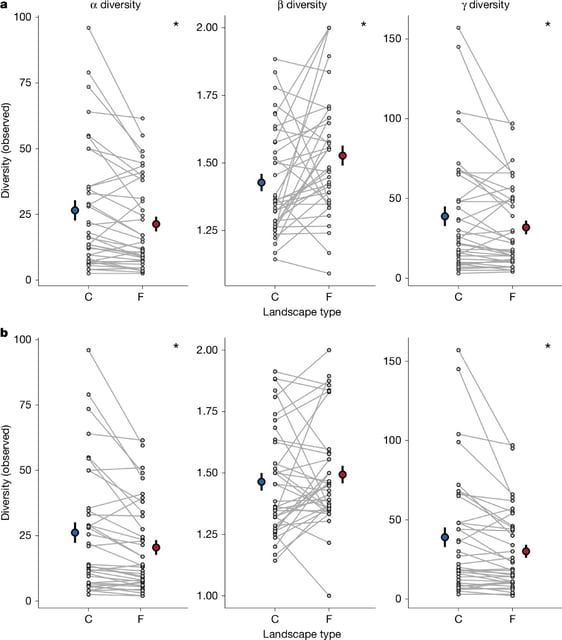
- A University of Michigan-led study finds fragmented forests host significantly fewer species compared to continuous landscapes, with biodiversity losses of up to 13.6% locally and 12.1% across landscapes.
- The research analyzed 4,006 species across 37 global sites, concluding that fragmentation negatively impacts biodiversity across all scales and taxonomic groups.
- While fragmented areas may increase species turnover (beta diversity), this does not offset the overall biodiversity loss in these landscapes.
- Fragmentation also compromises ecosystems' ability to store carbon, further emphasizing its environmental consequences.
- The study advocates for shifting conservation efforts toward forest restoration and reforestation, moving beyond debates over preserving fragmented versus continuous habitats.