



Overview
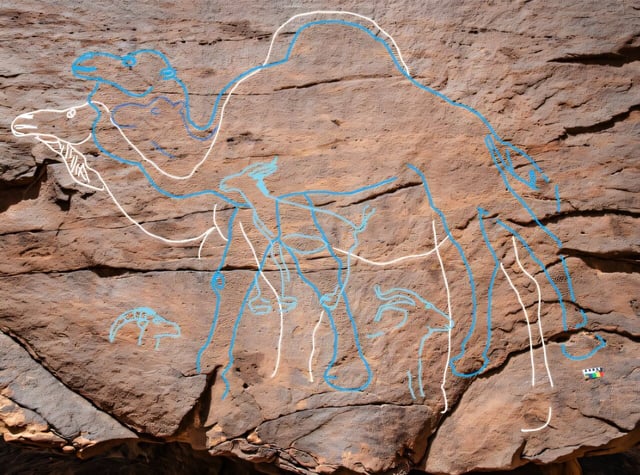
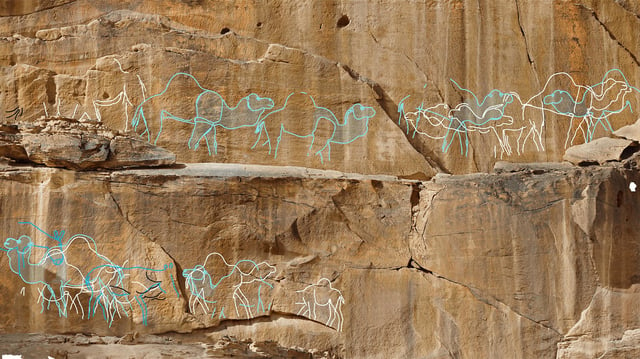
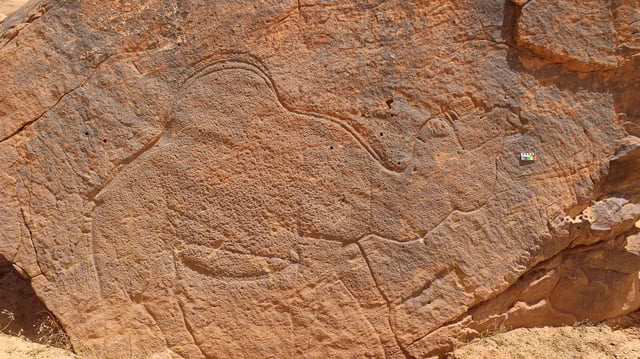
- Archaeologists documented 176 engravings on 62 panels across Jebel Arnaan, Jebel Mleiha and Jebel Misma near the southern Nefud, including about 130 life-size animals such as camels, ibex, gazelles, wild donkeys and aurochs.
- A tool and sediments buried beneath the panels were luminescence-dated to roughly 12,800–11,400 years ago, providing indirect ages because the rock art itself cannot be directly dated.
- Some figures exceed two meters and were carved on narrow ledges up to 39 meters high using wedge-shaped stone tools, indicating hazardous working conditions and considerable skill.
- Excavations recovered 532 stone tools, arrowheads and beads—including a seashell bead—pointing to mobile hunter-gatherers with long-distance links to the Levant.
- Sediment studies indicate nearby seasonal lakes returned between about 16,000 and 13,000 years ago, pushing human use of interior northern Arabia back by roughly 2,000 years and supporting the view that the engravings served practical and social wayfinding roles.